SSR output vs relay output PID controller which do I need
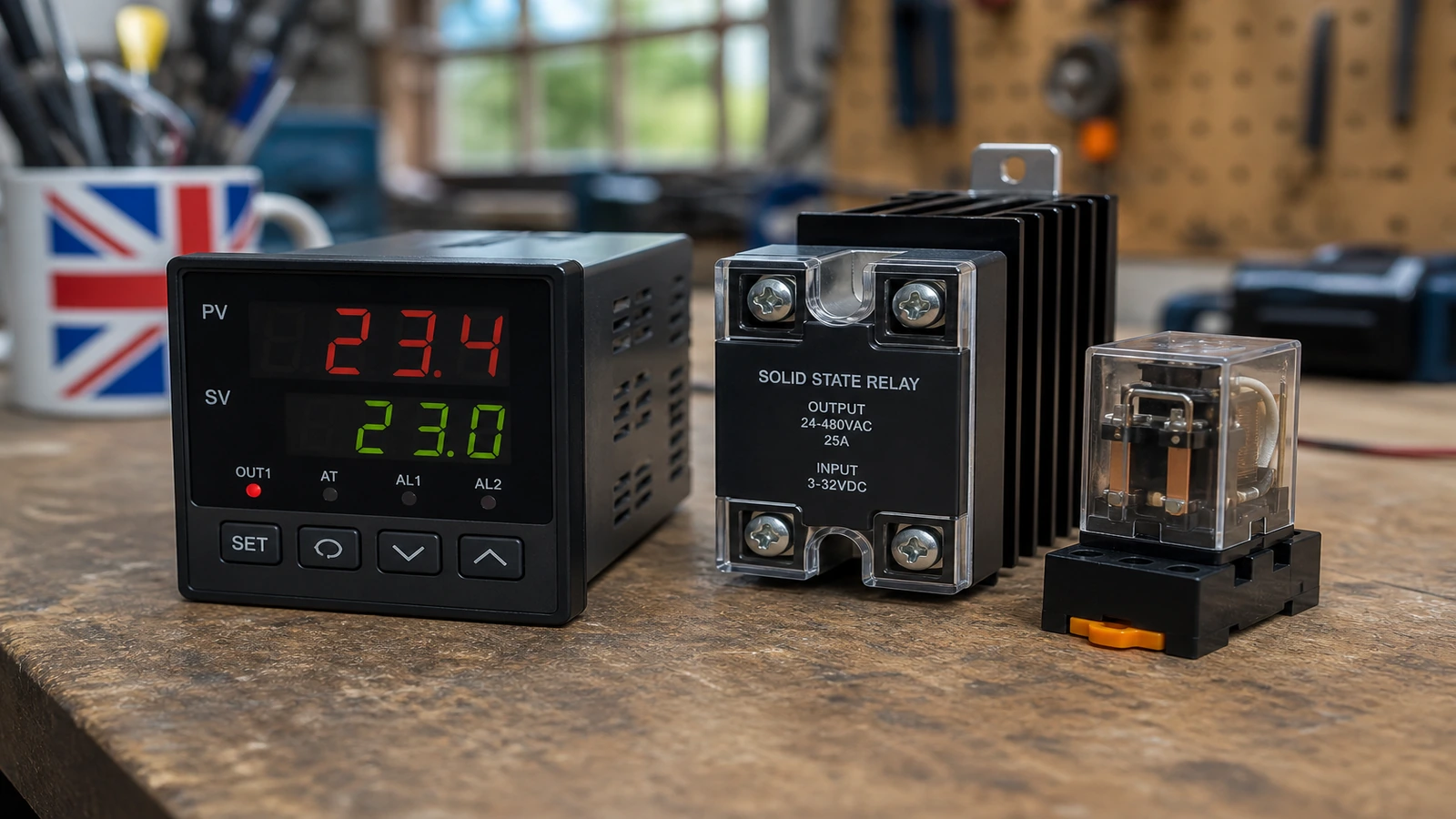
SSR output vs relay output PID controller which do I need is the question behind most kit splits on UK marketplaces. A PID that drives a heater through pulse-width modulation wants a fast, wear-free switch interface. A PID that only clicks a contactor coil or alarm relay wants a small mechanical relay output. The XMT7100 on this site is published with 12V DC SSR voltage pulse or 3A relay output — you order the variant that matches your load path, not both at full heater amperage.
Decision frame: fast heater cycling versus coil switching
Elements in kilns, brew kettles, and heat-press platens cycle frequently under PID control. An SSR pulse output fires an external solid-state relay that actually carries heater current. A 3A relay output on the controller is for low-current switching: contactor coil, alarm, or interlock. Confusing the two is how builders undersize terminals or expect the internal relay to carry kiln amperage.
SSR pulse path with external solid-state relay
Published spec on the XMT7100 detail page lists a 12V DC SSR voltage pulse output. That pulse trains an external SSR. Size the SSR and heatsink for your element current and mounting environment. The controller does not replace those parts. Heat-press owners replacing a dead board often land here; see the heat press controller replacement article for fit checks before you order.
- Expect rapid switching without mechanical relay wear on the load path.
- Plan polarity and heatsink discipline on the SSR — this article is not a BS 7671 wiring guide.
- Treat “SSR output” on the controller as drive logic, not “40A included”.
Relay output path for contactor coils
The same published table lists 3A relay output as an alternative. That suits switching a contactor coil, a small alarm relay, or a low-power heater where PID on/off is acceptable. It is the wrong finish if you need fast PWM into a multi-kilowatt element without a contactor in the chain.
Heatsink and polarity checks without wiring-code advice
SSR installations need correct polarity on the drive side and a heatsink sized for continuous duty. Relay installations still need fusing and isolation appropriate to the coil circuit. This article stops at output choice. It does not provide live-mains wiring diagrams, earth bonding instructions, or Part P answers. If your job needs a qualified electrician, hire one — a PID purchase does not replace that.
Map the choice to XMT7100 published outputs
| Your load | Typical output pick | On this site's XMT7100 listing |
|---|---|---|
| Kiln or brew element via SSR | SSR pulse plus external SSR/heatsink | 12V DC SSR voltage pulse option published |
| Contactor coil or alarm | Internal relay output | 3A relay option published |
| “Kit includes 40A SSR” | Verify box contents on the seller page | Controller-only unless the live detail page bundles parts |
Buying context for the panel head itself is in the XMT7100 UK buy guide on this site.
Review the detail page after you pick a path
Once you know whether you need SSR pulse or relay output, confirm the variant, price, and sensor list on the XMT7100 detail page. Do not assume the basket includes SSR, heatsink, or probe unless the listing names them.
Can the internal 3A relay drive my kiln element?
Usually not directly at kiln amperage. It switches small loads or contactor coils.
Does SSR output mean a 40A SSR is in the box?
No unless the live listing says so. Pulse output drives an external SSR you size separately.
Is either output food-grade or overshoot-free?
Neither output type changes food-contact status or performance claims this article will not invent.